Corporate Office Interior Design A Modern Guide
Corporate office interior design is more than just aesthetics; it’s about crafting a workspace that boosts productivity, fosters collaboration, and reflects your company’s brand. This guide dives into the key elements of modern office design, from space planning and layout to furniture selection and technology integration. We’ll explore how to create an environment that enhances employee well-being and drives success.
We’ll cover everything from choosing the right color palettes to selecting ergonomic furniture and incorporating sustainable materials. Learn how to optimize your office space for different work styles and departmental needs, all while staying within budget. Get ready to transform your office from a functional space into a thriving hub of innovation and creativity.
Defining Modern Corporate Office Design
Source: com.sg
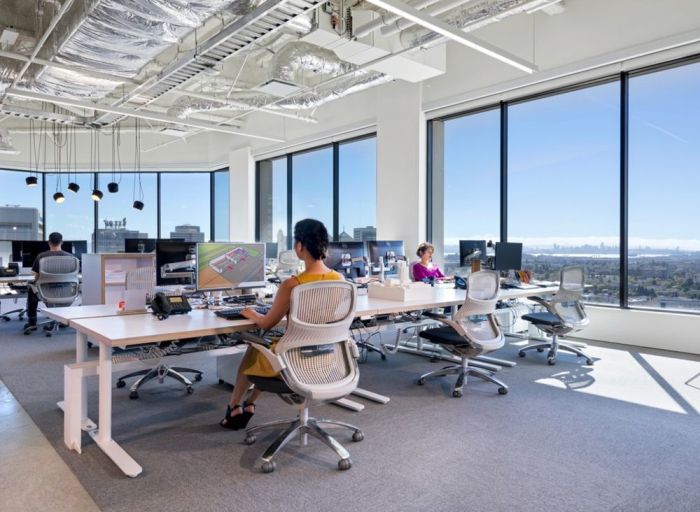
Modern corporate office design prioritizes employee well-being, productivity, and collaboration, moving away from the rigid, hierarchical structures of traditional offices. It’s a dynamic and evolving field, constantly adapting to technological advancements and shifting workplace cultures.
Modern corporate office design is characterized by several key features. Open-plan layouts foster communication and teamwork, while flexible workspaces accommodate various tasks and working styles. The use of natural light and biophilic design elements, such as plants and natural materials, creates a more calming and inspiring environment. Ergonomic furniture and technology integration ensure comfort and efficiency. The overall aesthetic tends towards minimalism and functionality, with a focus on clean lines and neutral color palettes, often punctuated by pops of vibrant color to energize the space.
Technology’s Impact on Contemporary Office Spaces
Technology has fundamentally reshaped the modern workplace. The rise of remote work and flexible schedules has necessitated designs that support both in-office and remote collaboration. Video conferencing technology requires dedicated spaces with good acoustics and lighting. Cloud-based systems and digital tools have reduced the need for extensive physical storage, allowing for more efficient use of space. Smart building technologies, such as automated lighting and climate control, enhance energy efficiency and employee comfort. Furthermore, the integration of mobile devices and collaborative software platforms has transformed how employees interact and share information, necessitating designs that facilitate seamless connectivity and information flow. For example, hot-desking arrangements, where employees don’t have assigned desks, are facilitated by technology that allows employees to easily access their files and applications from any computer.
Evolution of Corporate Office Design
The evolution from traditional to modern corporate office design reflects a broader shift in workplace philosophies. Traditional offices, typically characterized by individual cubicles or private offices arranged in a hierarchical manner, prioritized individual work and managerial control. These spaces often felt sterile and impersonal, prioritizing efficiency over employee well-being. The modern approach, however, prioritizes collaboration, flexibility, and employee well-being. The shift began with the introduction of open-plan layouts in the late 20th century, aiming to improve communication and collaboration. This evolved further with the integration of technology and a greater emphasis on creating stimulating and comfortable work environments that support a variety of work styles and needs. Companies like Google, with their playful and collaborative workspaces, have significantly influenced the trend towards more human-centric design.
Traditional vs. Modern Office Design
The following table compares key elements of traditional and modern office design:
| Feature | Traditional Office Design | Modern Office Design |
|---|---|---|
| Layout | Individual offices, cubicles, hierarchical arrangement | Open plan, flexible workspaces, activity-based working |
| Furniture | Standard, often inflexible desks and chairs | Ergonomic furniture, adjustable desks, comfortable seating |
| Technology | Limited technology integration, primarily desktop computers | Extensive technology integration, wireless connectivity, collaborative software |
| Atmosphere | Formal, impersonal, often sterile | Relaxed, collaborative, inspiring, incorporates natural elements |
Space Planning and Layout Strategies
Source: com.hk
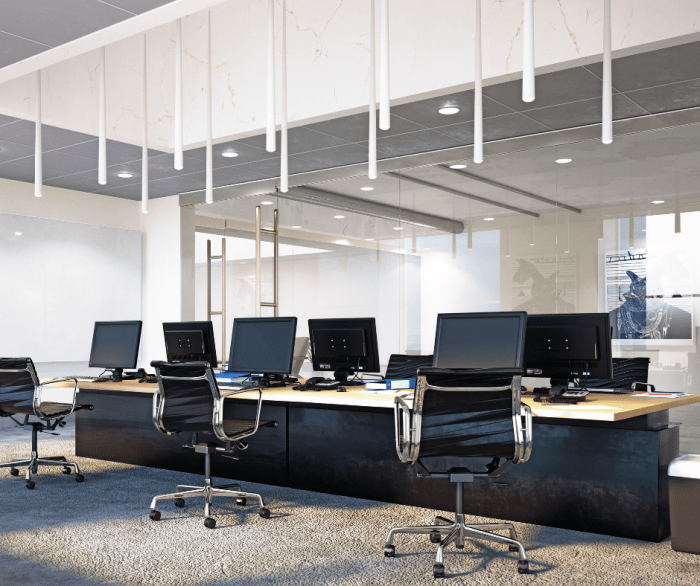
Effective space planning is crucial for creating a productive and enjoyable work environment. The layout you choose significantly impacts employee collaboration, communication, and overall well-being, directly affecting company culture and productivity. Careful consideration of workflow, team dynamics, and individual needs is paramount to achieving an optimal design.
Office Layout Types and Their Suitability
Different office layouts cater to varying company cultures and work styles. Open-plan layouts foster collaboration and communication, ideal for companies with a flat organizational structure and a culture of teamwork. Cellular layouts, with individual or small team offices, offer more privacy and concentration, better suited for companies prioritizing individual focus and confidentiality, like those in finance or legal sectors. Hybrid layouts combine elements of both, providing a balance between collaboration and individual workspaces, offering flexibility to accommodate diverse needs within a single organization. The choice depends on the specific company’s needs and priorities.
Ergonomics and Employee Well-being in Space Planning
Prioritizing ergonomics and employee well-being is not just a matter of comfort; it’s a crucial factor in boosting productivity and reducing health issues. Ergonomic considerations include proper chair adjustments, monitor placement to minimize eye strain, sufficient lighting to prevent headaches, and adequate space for movement to avoid stiffness. Well-being elements encompass access to natural light, comfortable break areas, and quiet zones for focused work. Investing in these aspects significantly improves employee satisfaction and reduces absenteeism, leading to a healthier and more productive workforce. For example, a company implementing standing desks and adjustable height chairs saw a 20% reduction in reported back pain among employees.
Optimal Office Layout for a Hypothetical Company
Let’s imagine a tech startup, “InnovateTech,” with 50 employees across marketing, software development, and sales teams. Their office, a 5,000 sq ft space, would benefit from a hybrid layout. The central area would be an open-plan collaborative space with comfortable seating, modular furniture, and whiteboards for brainstorming. This area would be surrounded by smaller, enclosed team rooms for focused work. The marketing team, needing creative collaboration, would have a dedicated, bright area near the collaborative space, with ample natural light. The software development team would occupy quieter, more enclosed spaces to minimize distractions, equipped with ergonomic workstations and ample screen space. The sales team would have individual desks in a more open area, but with access to private booths for calls. A central break room with comfortable seating, a coffee bar, and a quiet lounge would be located strategically for easy access. The overall aesthetic would be modern and minimalist, using natural materials and vibrant colors to foster creativity and energy.
Factors to Consider When Designing for Different Departments, Corporate office interior design
Designing spaces for different departments requires considering their unique needs and workflow.
- Marketing: Creative spaces with collaborative areas, ample natural light, and inspiring décor. Consider providing areas for photo shoots and video production if applicable.
- Finance: Private offices or enclosed workspaces to ensure confidentiality, secure storage for sensitive documents, and ergonomic workstations for detailed work.
- Sales: A balance between individual workspaces for focused tasks and collaborative areas for team meetings and training. Consider phone booths for private calls.
- Human Resources: Private interview rooms, comfortable waiting areas, and secure storage for employee files.
- Executive Team: Private, spacious offices with high-quality furniture and advanced technology. Meeting rooms with video conferencing capabilities.
The Role of Color, Lighting, and Materials
Source: behance.net
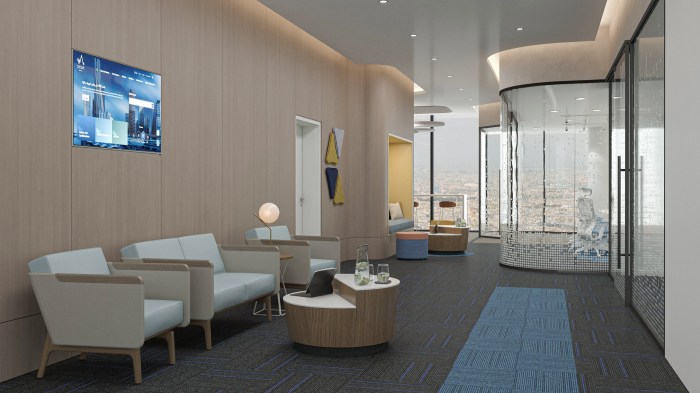
Creating a productive and inspiring workspace goes beyond just desks and chairs. The thoughtful selection of color palettes, lighting strategies, and materials significantly impacts employee well-being and overall office efficiency. This section explores how these elements contribute to a successful modern office design.
Color Psychology in the Workplace
Color significantly influences mood, productivity, and even creativity. Warm colors like reds and oranges can stimulate energy and enthusiasm, but overuse can lead to stress and anxiety. Cool colors such as blues and greens are generally calming and promote focus, ideal for areas requiring concentration. Neutral tones like grays and beiges provide a balanced backdrop, allowing other design elements to stand out. Consider the specific function of each space when choosing colors; a vibrant meeting room might benefit from energizing hues, while a quiet workspace might be better suited to calming tones.
Color Palettes for Different Office Environments
- Creative Offices: Vibrant and playful palettes are ideal for fostering innovation. Think combinations of bright yellows, oranges, and teal, accented with pops of bolder colors like fuchsia or turquoise. These colors encourage collaboration and brainstorming.
- Corporate Offices: More traditional corporate settings often benefit from sophisticated and calming palettes. Neutral grays and beige are frequently used as a base, complemented by subtle blues or greens to evoke professionalism and trust. Accents of gold or deep burgundy can add a touch of luxury and sophistication.
- Tech Offices: Tech companies often opt for modern and minimalist palettes. Clean whites and grays are popular, often paired with accents of bright blues, greens, or even neon colors to represent innovation and technology. These palettes create a sleek and contemporary atmosphere.
Lighting Strategies for Optimal Productivity
Proper lighting is crucial for both employee comfort and productivity. A combination of natural and artificial light is generally recommended. Maximizing natural light through large windows and skylights helps regulate circadian rhythms and improves mood. However, natural light can be inconsistent, so supplemental artificial lighting is necessary. Layered lighting, combining ambient, task, and accent lighting, offers flexibility and control. Ambient lighting provides overall illumination, task lighting focuses light on work surfaces, and accent lighting highlights specific features. Using LED lighting is energy-efficient and provides high-quality illumination. Consider incorporating dimmers and adjustable lighting fixtures to allow employees to personalize their workspace lighting.
Sustainable and Eco-Friendly Materials
Choosing sustainable and eco-friendly materials is increasingly important in modern office design. These materials reduce the environmental impact of the building and contribute to a healthier indoor environment. Examples include reclaimed wood, bamboo flooring, recycled content fabrics, and low-VOC paints. These materials not only reduce waste but also often offer durability and aesthetic appeal. Consider using materials with certifications like Forest Stewardship Council (FSC) for wood or Cradle to Cradle Certified™ for other materials to ensure their sustainability. The use of locally sourced materials also reduces transportation emissions and supports local economies.
Furniture Selection and Functionality
Source: cherryhill.in
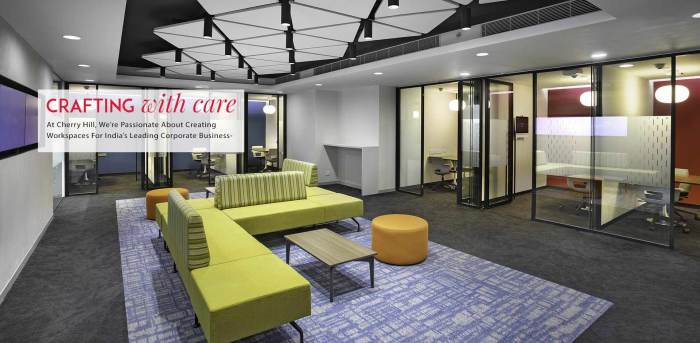
Choosing the right furniture is crucial for creating a productive and comfortable modern office environment. The furniture you select directly impacts employee well-being, workflow efficiency, and the overall aesthetic of your workspace. Prioritizing ergonomic design and adaptable solutions ensures your office caters to individual needs and fosters a positive work atmosphere.
Ergonomic and adaptable furniture is essential for maximizing productivity and minimizing health risks associated with prolonged sitting. Adaptable furniture allows for customization to suit individual preferences and body types, promoting better posture and reducing strain. Ergonomic design principles consider the natural movements and postures of the human body, aiming to minimize discomfort and prevent musculoskeletal issues. This translates to happier, healthier employees who are more focused and efficient.
Office Chair Selection
Office chairs are arguably the most important piece of furniture in any office setting. Different types of chairs cater to various needs and budgets. High-back chairs offer superior lumbar support, while mesh chairs promote better airflow and breathability. Task chairs are typically adjustable in height, tilt, and armrests, providing greater customization options. Executive chairs often feature more luxurious materials and advanced ergonomic features, but might not be necessary for all employees. The choice depends on individual needs and the overall office design aesthetic.
Modern Office Desks and Storage Solutions
Modern office desks prioritize functionality and flexibility. Height-adjustable desks allow employees to switch between sitting and standing positions throughout the workday, promoting better health and productivity. Sit-stand desks are now a common feature in many modern offices, recognizing the importance of movement and varied posture. Storage solutions should be integrated seamlessly into the workspace, offering ample space for documents, equipment, and personal belongings. Modular storage units allow for customization and easy reconfiguration as needed, providing adaptability to changing needs. Consider using a combination of open and closed storage to maintain a balanced and organized aesthetic.
Sample Furniture Plan for a Small Team
This plan Artikels furniture for a small team of four, working in a shared office space of approximately 200 square feet. The focus is on maximizing space and ensuring comfortable, functional work areas.
- Four Height-Adjustable Desks: Allowing each team member to choose their preferred working posture. Placed individually, ensuring adequate personal space.
- Four Ergonomic Task Chairs: Each chair is adjustable in height, tilt, and armrests to accommodate individual needs and preferences. Positioned directly in front of each desk.
- One Large Shared Table: A central meeting and collaboration point, allowing for informal brainstorming sessions and team meetings. Located centrally in the office.
- Modular Storage Unit: Provides ample storage for shared documents, office supplies, and equipment. Positioned against one wall to maximize floor space.
- Small Filing Cabinet: For confidential documents that require secure storage. Located near the shared table, easily accessible to the team.
- Small Coffee Table: Offers additional surface area for casual meetings or placing drinks and snacks. Positioned near the shared table.
Incorporating Technology and Collaboration Tools: Corporate Office Interior Design
Source: behance.net
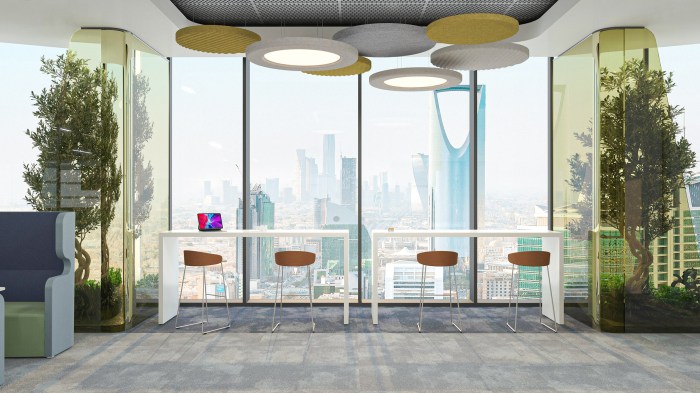
Technology is no longer a mere add-on in modern office design; it’s the very foundation upon which the entire workspace is built. Seamless integration of technology enhances productivity, improves communication, and creates a more dynamic and engaging work environment. Smart building technologies and collaborative spaces are key elements in achieving this.
Smart technology’s impact on office design is profound. It allows for personalized and automated control over various aspects of the workspace, leading to increased comfort, efficiency, and cost savings. Consider the shift from static layouts to flexible, adaptable spaces enabled by technology. This responsiveness to individual needs and changing work styles is a defining feature of contemporary office design.
Smart Technology Integration in Office Design
Integrating smart technology goes beyond simply installing the latest gadgets. It involves a holistic approach, carefully considering the user experience and the overall design aesthetic. For instance, smart lighting systems can adjust brightness and color temperature throughout the day, mimicking natural light patterns to improve employee well-being and productivity. Similarly, smart climate control systems learn individual preferences and automatically adjust temperature and airflow to create optimal comfort zones. These systems are often managed through a central platform, allowing for easy monitoring and control, minimizing energy consumption and maximizing efficiency. Think of a system that dims the lights automatically in unoccupied zones, optimizing energy use while enhancing the overall ambiance.
Collaborative Space Design for Teamwork and Communication
Effective collaboration hinges on well-designed spaces that facilitate interaction and communication. These spaces should be flexible, adaptable, and equipped with the right technology to support various collaboration styles. This means moving away from traditional, fixed meeting rooms towards multi-functional spaces that can be easily reconfigured for different team sizes and activities. Consider incorporating writable surfaces, comfortable seating arrangements that encourage informal discussions, and ample access to power outlets and high-speed internet. The design should promote a sense of openness and connection, encouraging spontaneous interaction and knowledge sharing.
Technologically Advanced Meeting Room Design
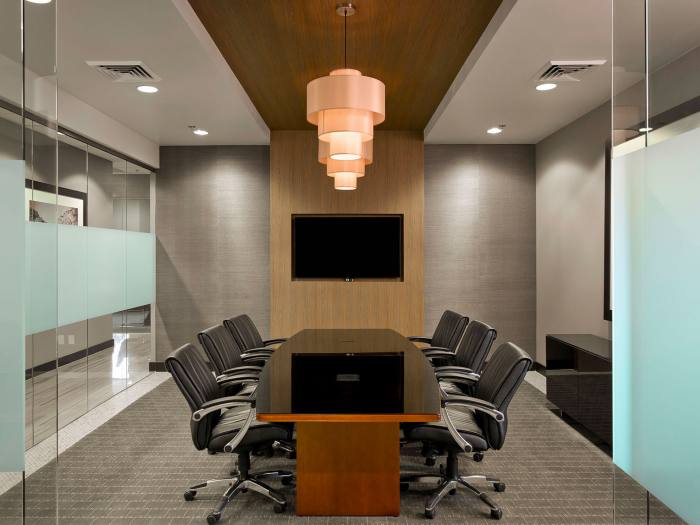
Imagine a meeting room with a large, interactive touchscreen display seamlessly integrated into the wall. This display serves as the central hub for presentations, video conferencing, and collaborative brainstorming sessions. Wireless connectivity ensures easy screen sharing from laptops and mobile devices. High-quality audio-visual equipment, including microphones and speakers, guarantees clear communication for both in-person and remote participants. Integrated lighting controls allow for adjusting the room’s ambiance to match the meeting’s purpose, while a smart climate control system ensures optimal temperature and air quality. The room is also equipped with a built-in camera system for recording meetings and a sophisticated scheduling system for easy booking and resource management. This holistic approach transforms the meeting room from a static space into a dynamic, technologically advanced hub for collaboration and communication.
Budgeting and Cost Considerations
Source: estestinc.com
Designing a modern corporate office isn’t just about aesthetics; it’s a significant financial undertaking. Understanding and managing the budget is crucial for a successful project, ensuring you get the best return on your investment without compromising on quality or functionality. This section Artikels key cost factors, budgeting strategies, and cost comparisons for various design choices.
Key Cost Factors in Corporate Office Interior Design encompass a wide range of expenses, from initial planning and design fees to the final touches and ongoing maintenance. These factors can vary greatly depending on the size of the office space, the desired level of sophistication, and the location. Careful planning and realistic budgeting are essential to avoid cost overruns.
Cost Breakdown of Design Elements
The following table provides a simplified breakdown of potential costs associated with different aspects of corporate office interior design. Remember, these are estimates and can fluctuate based on specific choices and market conditions. For example, high-end custom furniture will significantly increase costs compared to readily available options. Location also plays a vital role; metropolitan areas typically have higher labor and material costs than smaller cities.
| Design Element | Cost Range (USD) | Factors Influencing Cost | Cost-Saving Strategies |
|---|---|---|---|
| Space Planning & Design | $5,000 – $50,000+ | Size of space, complexity of design, designer’s fees | Consider using a less experienced but talented designer or utilizing online design tools for initial planning. |
| Construction & Renovation | $10,000 – $100,000+ per 1000 sq ft | Extent of renovations, material choices, labor costs | Prioritize necessary renovations, opt for cost-effective materials without sacrificing quality, explore alternative construction methods. |
| Furniture & Fixtures | $5,000 – $50,000+ | Quantity and type of furniture, custom vs. pre-fabricated options, material quality | Mix custom pieces with cost-effective pre-fabricated furniture, consider leasing options for certain items. |
| Technology & AV Integration | $2,000 – $20,000+ | Type and quantity of equipment, complexity of installation | Prioritize essential technology, explore cost-effective equipment options. |
Optimizing Budget Allocation
Effective budget allocation requires a prioritized approach. Start by defining your must-haves versus your nice-to-haves. For example, ergonomic seating might be a must-have for employee well-being, while a high-end coffee machine might be a nice-to-have. Prioritize investments in elements that directly impact employee productivity and well-being, such as lighting and comfortable seating. Explore cost-effective alternatives for less critical elements. For instance, using readily available materials like standard paint instead of custom finishes can save significant costs.
Custom vs. Pre-fabricated Furniture
Choosing between custom and pre-fabricated furniture is a key decision impacting budget and design. Custom furniture offers unique design flexibility and superior quality but comes with a higher price tag. Pre-fabricated furniture offers a wider range of readily available options at lower costs, potentially sacrificing some level of customization. A balanced approach, incorporating a mix of both, often yields the best results – utilizing custom designs for statement pieces and pre-fabricated options for general furniture needs. Consider the long-term cost-effectiveness; investing in high-quality, durable furniture might be more cost-effective in the long run than repeatedly replacing cheaper alternatives.
End of Discussion
Source: behance.net
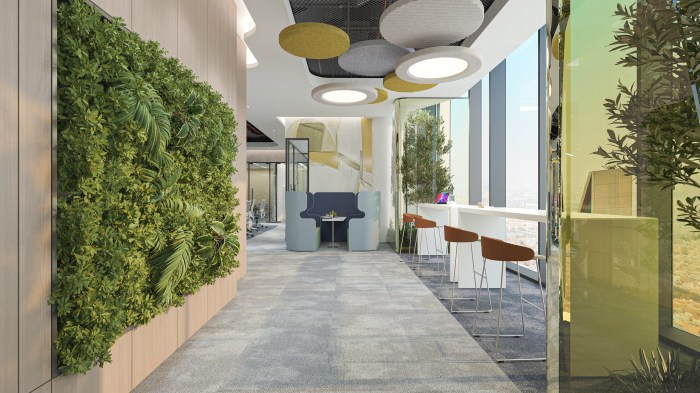
Designing a successful corporate office interior requires careful consideration of numerous factors, from employee well-being and workflow optimization to budget constraints and technological integration. By thoughtfully addressing these aspects, you can create a workspace that not only looks great but also significantly enhances productivity, collaboration, and overall company success. Remember, a well-designed office is an investment in your employees and your future.